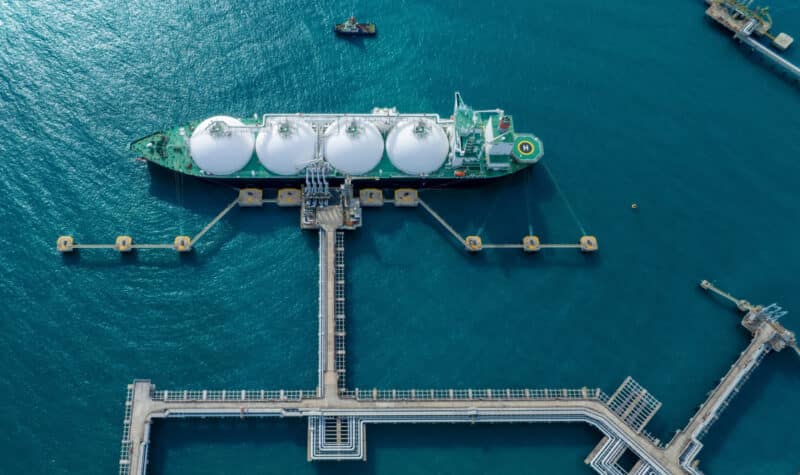
CII is Likely to Reshape the Entire Maritime Industry
As of January 2023, the entire maritime industry is required to comply with the International Maritime Organization (IMO) new regulations driving the decarbonization of the industry. Annual reporting of the Carbon Intensity Indicator (CII) implies lots of new challenges that might totally reshape the field.
Since the beginning of 2023, all ships have to report their energy efficiency by calculating their attained Energy Efficiency Existing Ship Index (EEXI) as well as reporting their annual operational carbon and their Carbon Intensity Indicator (CII). The latter measures the vessel’s carbon intensity and is expressed in CO2 per unit of cargo-
carrying capacity and nautical miles. The simple formula is:

The result is then ranked from A to E, with C being the minimum threshold and E being the worst grade. As part of the Ship Energy Efficiency Management Plan (SEEMP), a corrective plan must be formulated and implemented for vessels that attain a D rating for three consecutive years or an E rating within a single year. The latter will become stricter by 2030 and concerns vessels with a Gross Tonnage (GT) over 5,000, from tankers to bulk and more.
In the numerator, the variable factor is the fuel consumption, on which shipowners can reduce their CII rating by reducing speed or loading less cargo. The CO2 emission factor can be lowered by using lower carbon emissions fuels such as LNG or biodiesel. As the carbon intensity is a fixed carbon factor, it creates no incentive to implement Carbon Capture Storage (CCS) technologies onboard. In the denominator, as the cargo carrying capacity remains a steady variable (either deadweight tonnage (dwt) or GT) shipowners can only impact their CII rating by managing the distance they sail.
Despite its noble intentions, IMO’s CII system raises concerns among the maritime industry’s stakeholders. Some of the most important challenges are events beyond the shipowner’s control such as weather or port conditions. Indeed, vessels cannot report voyage adjustments for adverse weather conditions and data for fuel consumption at anchorage cannot be adjusted.
In addition, the way the formula is built up, plus the fact that fuel consumed in port is not considered when calculating the CII, encourages shipowners to sail at low speed while in ballast. This is paradoxical in view of the need to optimize loading to reduce CO2 emissions per metric ton (MT). Moreover, this new CII rating system is likely to create obstacles when discussing period basis agreements as shipowners would lose control of their operations. Hence, a new CII operations clause has emerged to ensure cooperation between owners and time charterers by agreeing on a certain CII rating level. However, some charterers define this clause as imbalanced as they claim to have to burden too much of the responsibility.
Nevertheless, the efficiency of IMO’s regulation is to be assessed in the following years, and amendments as well as further developments could occur by January 2026 at the latest.
While the implementation of the CII system provides an important tool to assess and reduce the maritime industry’s carbon emissions, it raises concerns over variables beyond the shipowner’s control, the formula’s limitations, and complexities in the relationship between shipowners and time charterers. All these challenges have the potential to totally reshape the shipping industry and will require all the stakeholders to adopt a cooperative approach to overcome these difficulties.
© 2024 Riverlake. All rights reserved.