Liquefied Natural Gas, a one-off savior, or a new energy paradigm?
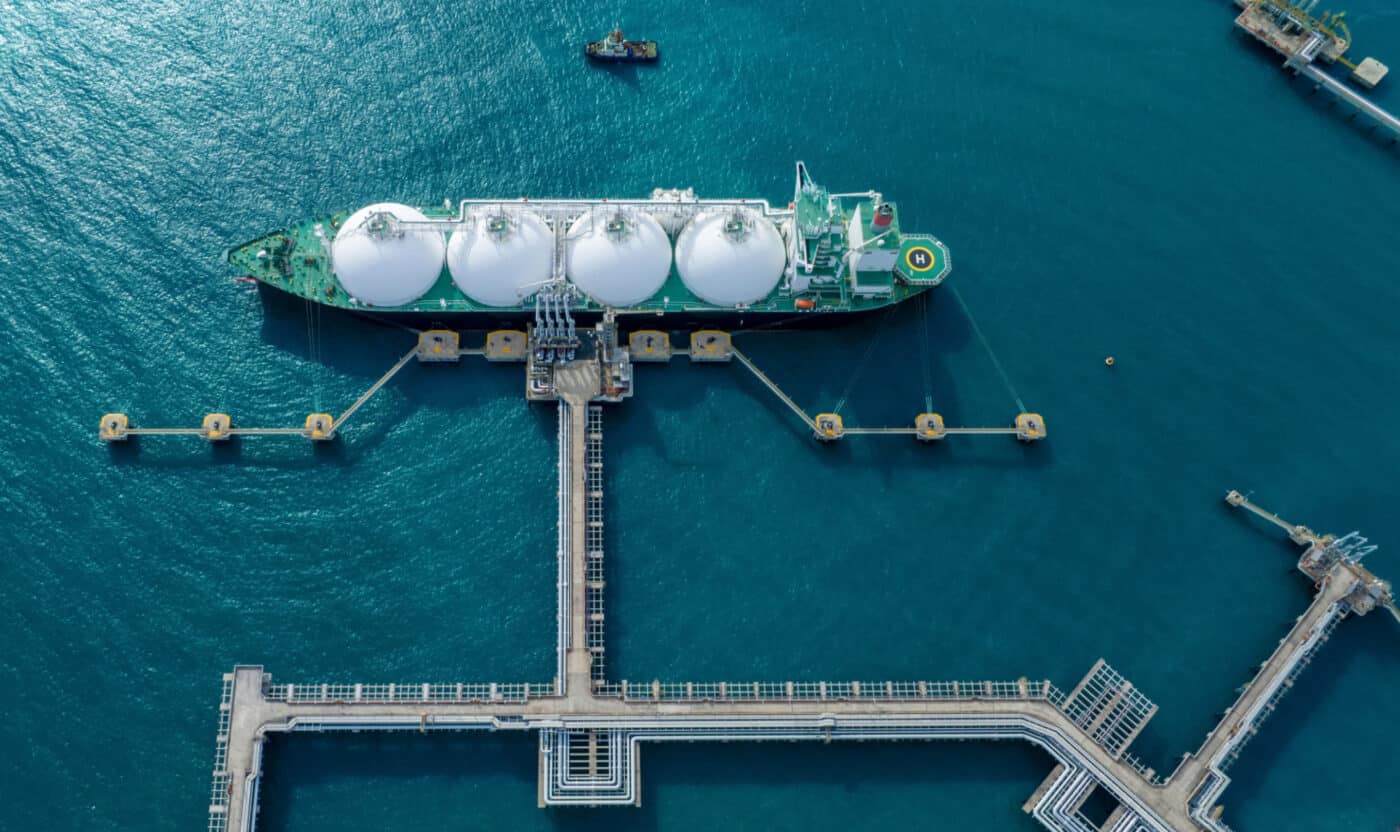
Liquefied Natural Gas, LNG, is the solution that seems to be at the forefront as an intermediate solution between fossil fuels and totally renewable fuels such as methanol, ammonia, or hydrogen. The chemical, mostly (around 90%) composed of methane, CH4, is cooled down to -162°C (-260°F) to go from its gaseous state to liquid and thus gain greater density (600x denser). This solution, which optimizes the volume utilized, is based on offshore transportation, as onshore pipelines transport the gas.
Several ships are already equipped with engines that can run on LNG, while major shipowners in Europe have order books for LNG-powered vessels, often fitted with dual-fuel engines that allow them to operate using a mix of diesel and natural gas. The pressure exerted by numerous legislative measures to reduce carbon emissions is making this gas increasingly attractive from an economic point of view.
LNG has a slightly higher calorific value than MGO (54-56 MJ/kg vs. 40-42MJ/kg), however, its density is 50% lower (around 450 kg/m3 vs. 900-1,000 kg/m3), meaning that LNG needs bigger tanks to derive the same energy level compared to oil-based fuels.
Liquefied hydrogen and LNG are often pitted against each other to determine which solution will win the day. To reach its liquid state, H2 needs to be cooled to a lower temperature than its peer (-252.87°C). At this temperature, the gas has a 71 kg/m3 density. In its liquid state, natural gas has a 450-480 kg/m3 density. In terms of shipping, the volume required for a voyage limits a lot of the capacity to be a bunker fuel. In addition, the hydrogen molecule is several times smaller than the natural gas one (2 and 16 g/Mol, respectively), so the quality of the steel and the welds must be much better to ensure that hydrogen handling goes smoothly.
Liquefied H2 has a high energy density (calorific value) of 120-to-142 MJ/kg. It is three times higher than LNG’s and MGO’s. Despite that, the specific features described below clearly show that our beloved gas is currently
a much better short-term solution, both as a fuel for offshore transport and as a cargo. Obviously, the renewable nature of hydrogen, which is not inherent in natural gas, makes the latter more attractive from a long-term environmental point of view.
As a result of the drastic increase in LNG bunkering, some companies began to share LNG bunker prices for different ports including Rotterdam. For instance, the LNG-MGOe is the price for an amount of LNG delivering the same amount of energy as one metric ton of MGO (11.63 MWh/mt 1). On Monday, September 11th, 2023, it was valued at USD 614/mt, which is lower than USD 931/mt for MGO in the same port, Rotterdam. The metric ton of LNG was priced at USD 728/mt on the same day. It is an impressive observation demonstrating the chemical’s financial attractiveness. However, The volume required is of course much higher than MGO’s given the lower density of the product, therefore explaining why the industry has not entirely converged towards this fuel yet.
As mentioned above, there exist already vessels running on LNG, and bunkering infrastructure is already in place. However, a trend has become apparent in the order books this year: a switch from LNG to Methanol. One of the reasons for this is scientific pessimism about the real potential of natural gas, compared with other fossil fuels, to reduce the environmental impact of maritime transport. While some studies point to a clear difference with coal and oil, respectively 40% and 30% less carbon dioxide (CO2) production for comparable use, others are more pessimistic (i.e., Deborah Gordon et al 2023). There are other disadvantages such as methane leakages if the product is not managed well. Indeed, the latter traps more heat in the atmosphere per molecule than CO2, due to its structure, which makes it 80 times more (environmentally) harmful than carbon dioxide during the 20 years following its release.
Despite these doubts and disadvantages, the global LNG market is booming. Behind, the war in Ukraine and the disruption in supply between Russia and Europe via gas pipelines. Coupled with an exponential increase in energy needs in Southeast Asia. During the first half of 2023, global US exports, the highest in the world, were measured at around 328.5 million cubic meters per day (m3/d), which translates into a 4% increase compared to last year. As in 2022, Europe and Great Britain accounted for most US exports (67%), totaling more than 218 million m3/d. This number is set to rise as regasification capacity in Europe increases. Indeed, terminals are being built in Finland, Germany, Italy, and Spain to increase or create import capacity.
LNG currently shines as the go-to energy source, driven by pressing regional energy demands. However, its environmental impact remains uncertain, and it’s evident to achieve the 2030 and 2050 UN targets LNG, as a fuel, must be coupled to renewables.
1 Metric ton
© 2025 Riverlake. All rights reserved.