Tanzania’s fuel market: From stagnation to regional powerhouse
How Dar es Salaam became the petroleum gateway for landlocked Central and East Africa, and what the next decade will bring.
A market that barely moved. Then took off.
For two decades, Tanzania’s oil consumption barely budged. From 1980 to 2000, total demand hovered between 14,000 and 18,000 barrels per day, flat despite gradual population growth. The political and economic turmoil of the 1980s, structural adjustment programmes, import restrictions and currency controls kept fuel demand in check.
Then, around 2000, something changed. Economic liberalisation, sustained GDP growth averaging 6-7% per year, and rapid urbanisation combined to shift the trajectory sharply upward. By 2012, consumption had climbed past 45,000 barrels per day, nearly triple the 2000 level. The period from 2010 to 2013 was especially dramatic: throughput at the port of Dar es Salaam grew at an average of 20% per year, driven almost entirely by diesel (AGO) and petrol (Mogas), which together made up around 90% of total volumes.
| Tanzania has no domestic refinery. Every litre of petrol, diesel and aviation fuel consumed in the country, or transited through it, must be imported as a finished product, making the port of Dar es Salaam the single critical chokepoint for the region’s fuel supply. |
This rapid growth caught terminal operators and infrastructure planners off-guard. In 2014, a study by Riverlake for TIPER (Tanzania International Petroleum Reserves Ltd.) found the port was already operating near congestion limits, with the existing Single Point Mooring (SPM) capable of handling only around 3.2 million m³ per year, a threshold it was expected to breach within months. The study projected that, depending on growth scenarios between 5% and 20% per year, total market throughput could reach anywhere between 10 and 100 million m³ by 2030.
Dar es Salaam: Gateway for a landlocked region
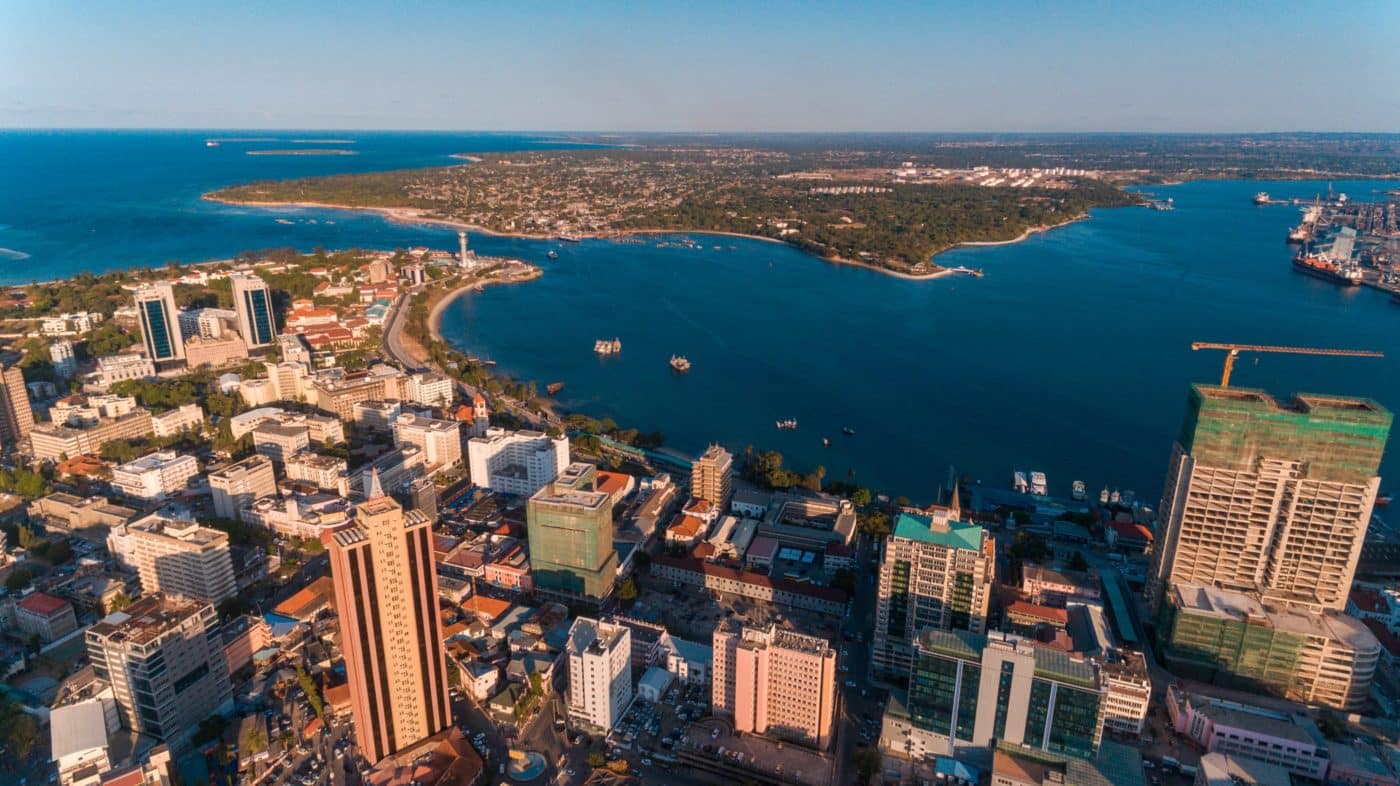
Tanzania’s fuel market is fundamentally a two-part story: domestic consumption and transit. Because Tanzania borders several landlocked countries, the Democratic Republic of Congo, Burundi, Rwanda, Uganda, Zambia and Malawi, the port of Dar es Salaam functions as far more than a national import terminal. It is the primary petroleum gateway for a region of well over 200 million people.
Transit volumes are substantial and often invisible in standard IEA import statistics, which record only locally consumed volumes. The 2014 TIPER study estimated that transit exports equalled roughly 75% of domestic consumption, meaning nearly half of everything discharged at Dar es Salaam was destined for neighbouring countries, loaded onto tanker trucks and driven inland along the Central Corridor through Tanzania, sometimes for thousands of kilometres.
Uganda, Rwanda and Burundi are heavily reliant on the Dar es Salaam corridor, while DRC’s eastern provinces have few other practical options. The strategic importance of this role was vividly illustrated in late 2024, when political unrest led to a temporary port closure that sent shockwaves through the region, forcing emergency rerouting through Kenya’s Mombasa port and causing price spikes across Central Africa.
In recent years, Tanzania has taken deliberate steps to cement this role. Annual petroleum imports under the national Bulk Procurement System (BPS) grew from 5.8 million tonnes in 2021 to 6.36 million tonnes in 2024, and total storage capacity at Dar es Salaam expanded from 1.29 billion litres to 1.72 billion litres over the same period. In early 2026, the government broke ground on a further $274 million storage expansion specifically designed to support regional transit volumes.
| Transit imports destined for landlocked neighbours rose by 13.1% in the 2023/24 financial year alone, reinforcing Tanzania’s emergence as the region’s dominant petroleum corridor. |
A shifting product mix: the rise of LPG
While diesel remains king, accounting for over 60% of total petroleum consumption and growing steadily, the most interesting structural shift in Tanzania’s fuel market is happening in the cooking fuel segment.
For decades, kerosene (not to be confused with jetfuel in the data) was the dominant household cooking and lighting fuel for urban and peri-urban Tanzanians. That picture has changed dramatically. Kerosene consumption has been in sustained decline, falling a further 14.9% in the first half of 2024 compared to the year before. Meanwhile, LPG consumption has exploded: from roughly 30,000 metric tons in 2010 to 150,000 metric tons by 2021, and LPG imports surged a further 38% in 2024 alone, reaching 403,638 metric tons according to Tanzania’s Energy and Water Utilities Regulatory Authority (EWURA).
The driving forces are a combination of government policy, urban income growth, and growing awareness of the health costs of indoor biomass burning. A 2024 government directive requiring institutions serving over 300 people daily to switch from firewood to clean fuels accelerated the transition. For LPG importers and terminal operators, this substitution trend represents one of the clearest structural growth opportunities in the East African downstream market.
Infrastructure catching up with demand
The infrastructure constraints identified in 2014 have proved prescient. For years, the TIPER terminal operated with storage well below what was needed to handle the growing throughput efficiently, in 2014, effective capacity stood at around 211,000 m³, against a projected requirement of 300,000 m³ by 2015 and 650,000 m³ by 2018.
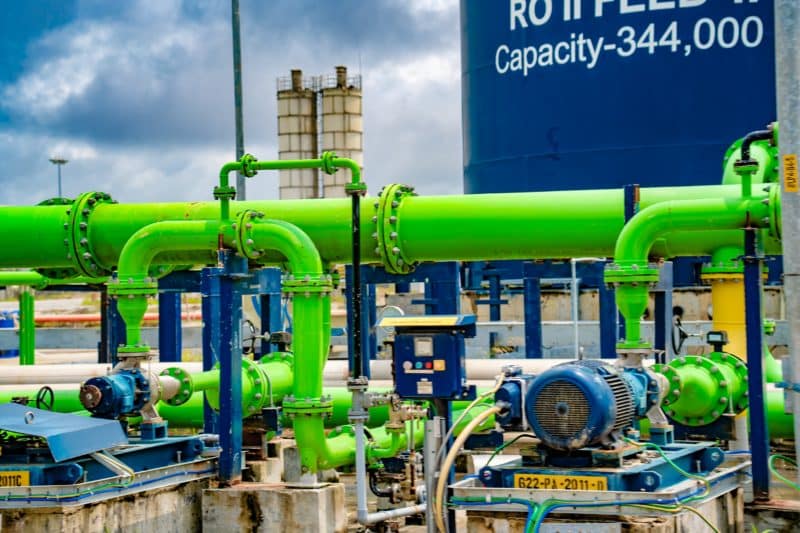
Progress has been made but the timeline slipped considerably from the original master plan. Development stages that were envisaged for 2015–2018 have materialised across 2020-2026. The pipeline infrastructure between TIPER and the Oil Marketing Companies (OMCs) has been a persistent bottleneck, the 50-year-old manifold and on-site piping were designed for a refinery, not a pure import terminal, and frequently leaked or underperformed. New manifolds and dedicated product lines are gradually being commissioned.
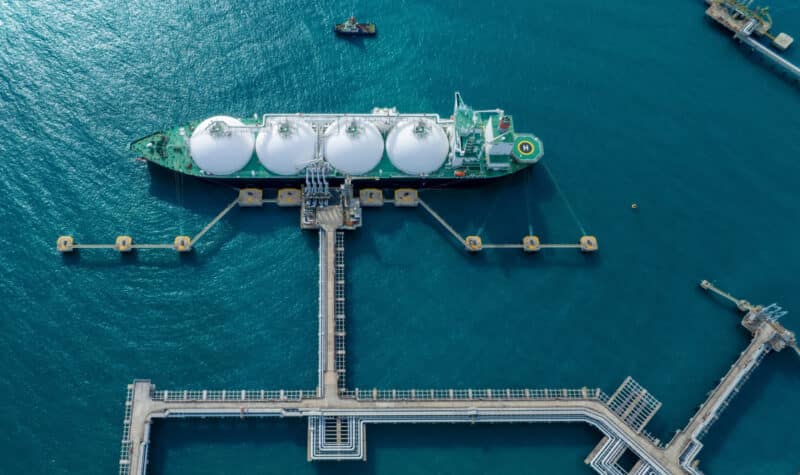
On the marine side, the original SPM was already near its AGO capacity ceiling in 2013–2014, and a second SPM for Mogas and kerosene products – planned for 2018 – has taken longer to materialise. The port has nonetheless dramatically improved berth productivity; average ship waiting times have fallen from 28 days to under a week, a transformation that has made Dar es Salaam increasingly competitive with Mombasa for regional transit cargo.
Looking ahead
Tanzania’s oil consumption in 2024 stood at approximately 83,500 barrels per day, compared to around 15,000 barrels per day in 2000, roughly a fivefold increase in 24 years. The 2014 TIPER study predicted that, assuming 10-15% annual growth, total throughput at Dar es Salaam could reach 15-25 million m³ per year by 2027-2030. Current data suggests the market is broadly tracking the mid-range scenario.
For oil & gas professionals and tanker operators active in the Indian Ocean and East African markets, a few dynamics are worth watching closely:
Diesel demand will continue to dominate, supported by ongoing construction, mining activity (Tanzania has significant gold and mineral sectors) and the rapidly expanding truck transport fleet serving the regional transit corridor.
LPG import growth is structural and policy-backed, not cyclical. The cooking fuel transition is still in early stages – per capita LPG consumption remains a fraction of South African levels – suggesting a long growth runway for small tanker and LPG vessel operators.
| Tanzania’s fuel market has moved from decades of stagnation to one of the fastest-growing import markets in sub-Saharan Africa. For operators with the infrastructure and positioning to serve both domestic growth and the vast landlocked hinterland, the opportunity is considerable. |
Sources: EWURA FY 2023/24 Petroleum Sub-Sector Performance Report; TIPER Infrastructure Development Plan (Riverlake Solutions, 2014); Enerdata; TanzaniaInvest; U.S. EIA.
© 2026 Riverlake. All rights reserved.