Fuelling growth: Cameroon’s rising petroleum demand and the case for Kribi
How two decades of GDP growth have strained a single-port import system — and why a greenfield terminal near Kribi could change everything.
A Country That Produces Oil but Imports Its Fuel
Cameroon sits on modest but commercially significant oil reserves in the Rio del Rey and Douala-Campo offshore basins, producing roughly 40,000 to 60,000 barrels per day. On paper this should make fuel supply straightforward. In practice, the country has spent the past decade as one of the most import-dependent fuel markets in Central Africa — a paradox that has direct consequences for tanker operators, terminal developers, and logistics providers across the region.
The reason is structural. SONARA, the country’s sole refinery in Limbe with a nameplate capacity of 42,000 barrels per day (2.1 million tonnes per year), suffered a devastating fire in May 2019 that halted all production. In the six years since, Cameroon has met virtually its entire domestic petroleum demand through imports. In 2025, the country imported in excess of 2.2 million metric tonnes of refined products — of which approximately 2 million tonnes were gasoline, diesel, kerosene and LPG.
|
Key Fact — SONARA Reconstruction |
Two Decades of Growth — What the Numbers Show
Between 2000 and 2023, Cameroon’s real GDP expanded from USD 17 billion to USD 61 billion (constant 2015 prices), a compound annual growth rate of approximately 3.8% — respectable by regional standards, though not the high-single-digit growth seen in some East African peers.
Total petroleum fuel consumption (gasoline, diesel, kerosene, and LPG combined) rose from an estimated 812,000 tonnes per year in 2000 to around 2 million tonnes in 2025 — an increase of 146% over 23 years. Broken down by product, the story is nuanced:
| Product | 2000 (kt/yr) | 2025 (kt/yr) |
| Gasoline (Mogas) | 258 | 677 |
| Kerosene | 194 | 72 |
| Diesel (AGO) | 329 | 1,025 |
| LPG | 31 | 245 |
| TOTAL | 812 | 2,019 |
Source: IEA World Energy Statistics, converted at 23.9 t/TJ
Several trends stand out. Diesel and gasoline have more or less tripled. LPG consumption increased by 800%, driven by a government subsidy programme and urbanisation. Kerosene, by contrast, declined — consistent with the pattern observed across sub-Saharan Africa as LPG displaces it for household cooking.
On a per-capita basis, Cameroon’s fuel consumption has remained comparatively flat — from 52 to 67 kg per person per year — despite overall volume growth. This reflects population growth largely absorbing the demand increase. The contrast with regional peers is instructive: Côte d’Ivoire reached 115 kg per capita in 2023, Ghana 125 kg, and Senegal 105 kg. Cameroon’s per-capita figure suggests significant latent demand that GDP growth at sustained rates of 4–5% per year could unlock.
| Regional Context: GDP per capita vs. Fuel per capita (2023, IEA / World Bank) Cameroon: GDP/cap USD 1,468 → 52 kg/person/yr | Ghana: USD 2,132 → 125 kg | Côte d’Ivoire: USD 2,315 → 115 kg The relationship is clear: as per-capita income rises, fuel demand per person rises faster. At Ghana’s GDP level, Cameroon’s per-capita fuel use would be expected to more than double — implying a national market exceeding 3 million tonnes per year. |
The Douala Bottleneck
Almost all of Cameroon’s petroleum imports flow through the Port of Douala, which handles between 75% and 85% of the country’s international freight and serves as the principal distribution point for landlocked neighbours — most notably Chad and the Central African Republic. Douala accounts for around 80% of these countries’ foreign trade.
The port has structural limitations that are now well-documented. Its river channel, 50 kilometres from the open sea on the Wouri estuary, requires constant dredging to maintain a working draught of 7.6 to 8.4 metres at high tide — far less than modern large tankers require. This restricts vessel size and means that where Douala requires three vessel rotations to deliver a volume that a single large tanker can bring to Kribi in one call, the cost implications are stark. Vessel waiting times at Douala regularly reach nine days, the longest among major West African ports and significantly above the approximately seven days seen at Abidjan or Conakry.
In Q1 2025, the Port Authority of Douala reported that traffic fell 6.9% year-on-year, with vessel calls down 11%. The Ministry of Finance attributed persistent bottlenecks to aging equipment, slow dredging cycles, and steadily rising cargo volumes overwhelming infrastructure designed for a different era. An ambitious master plan adopted in December 2019 aims to expand Douala’s capacity from 13 million tonnes to 45 million tonnes by 2050 — but that timeline is measured in decades, not years.
For petroleum specifically, the constraints are compounded by the centralisation of fuel storage through SCDP, the state-owned depots company. SCDP’s current official storage capacity is 245,500 m³ of refined products — a figure that looks increasingly inadequate against annual import volumes running above 2 million tonnes to be distributed through several depots in the whole.
| Industry Observation With SONARA offline, every litre of diesel, gasoline, jet fuel, and kerosene that Cameroon consumes must arrive by sea. A constrained import terminal is not merely a logistics inconvenience — it is a direct constraint on economic growth. Fuel shortages raise production costs for agriculture, manufacturing, and transport, creating a ripple effect through the wider economy. |
Kribi: A Strategic Alternative
The development of Kribi deep-water port — 130 kilometres south of Douala on Cameroon’s Atlantic coast — represents the most significant structural shift in the country’s port system in generations. Operational since March 2018, Kribi was explicitly designed to address Douala’s limitations. Its channel accommodates vessels drawing up to 16 metres, more than double Douala’s effective working draught. It handled 12.7 million tonnes of cargo in 2024, up from 10.7 million in 2023 — a 19% increase year-on-year.
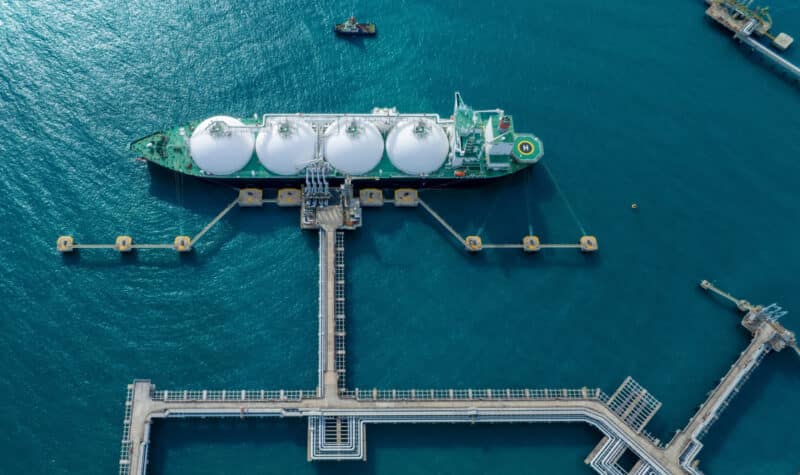
For petroleum logistics, Kribi changes the equation fundamentally. Where Douala’s depth-restricted channel forces operators to rely on smaller vessels and multiple port calls, Kribi can receive tankers of up to 80,000 DWT in a single call — directly cutting freight costs, vessel waiting time, and the number of rotations required to supply a given volume. The port’s surrounding industrial zone provides ample land for storage development, and its growing customs revenue base — nearly FCFA 1.2 trillion since opening — confirms it is already a functioning trade gateway, not merely a project on paper.
Kribi’s strategic position is further reinforced by its existing role as the terminus of the Chad-Cameroon oil pipeline, which has transported crude from landlocked Chad to the Atlantic since 2003. That infrastructure logic — Kribi as the coastal anchor for Central Africa’s landlocked hinterland — translates directly to the case for refined product imports: Chad, the Central African Republic, and potentially further afield stand to benefit from competitively priced fuel delivered through a deep-water hub rather than through Douala’s constrained system.
The Investment Rationale
From an infrastructure development perspective, the Cameroon petroleum market presents a compelling case. The factors align in a way that is relatively rare:
- Structural import dependency: with SONARA not expected back online anytime soon, the coming years guarantee high import volumes regardless of refinery outcomes.
- Constrained primary port: Douala cannot serve larger vessels and is operating under significant congestion. SCDP’s own analysis confirms that Kribi can receive in one tanker call what Douala requires three rotations to handle — a threefold reduction in port costs and turnaround time.
- Growing regional hub role: Kribi already serves Chad and CAR through the Chad-Cameroon pipeline corridor. A petroleum terminal at Kribi extends this hub logic to refined products, potentially serving landlocked neighbours that currently receive fuel through more costly routes.
- Latent demand: at Cameroon’s current GDP growth trajectory of 3.7–4.2% per year, per-capita fuel consumption is likely to rise from its current 68 kg toward the 100–125 kg levels seen in comparable economies. That implies national demand could approach 3 million tonnes per year within 10 years.
- LPG trajectory: demand for LPG is rising at approximately 5% per year, driven by urbanisation and subsidy support. Large scale LPG import storage could close this gap.
Conclusion
Cameroon is a market where demand fundamentals and infrastructure constraints have converged to create a clear opportunity for terminal investment. Two decades of steady GDP growth have built a fuel market of 2 million tonnes per year that is almost entirely dependent on seaborne imports. The port through which almost all of those imports flow is congested, depth-limited, and projected to remain so for decades under even optimistic expansion scenarios.
Kribi offers the physical answer: deep draught, modern infrastructure, room for industrial development, and a growing role as Central Africa’s premier logistics gateway. The combination of a structural import requirement, a depth-constrained incumbent port, a rapidly growing market, and a ready deep-water alternative is rare. For tanker operators, terminal developers, and downstream investors, this alignment of factors makes Cameroon one of the more compelling greenfield infrastructure stories in sub-Saharan Africa today.
Sources: IEA, World Bank, Enerdata, SCDP (scdp.cm, June 2026), Business in Cameroon, African Mining Market, SNH, PAK. Fuel data: IEA World Energy Statistics.
© 2025 Riverlake. All rights reserved.