Oil products in short
One of the strong points of Riverlake is the wealth of practical knowledge and experience with the handling and storage of many oil products. In this article we provide a short and comprehensive summary of the most important facts about the most widely traded petroleum products.
Crude oil
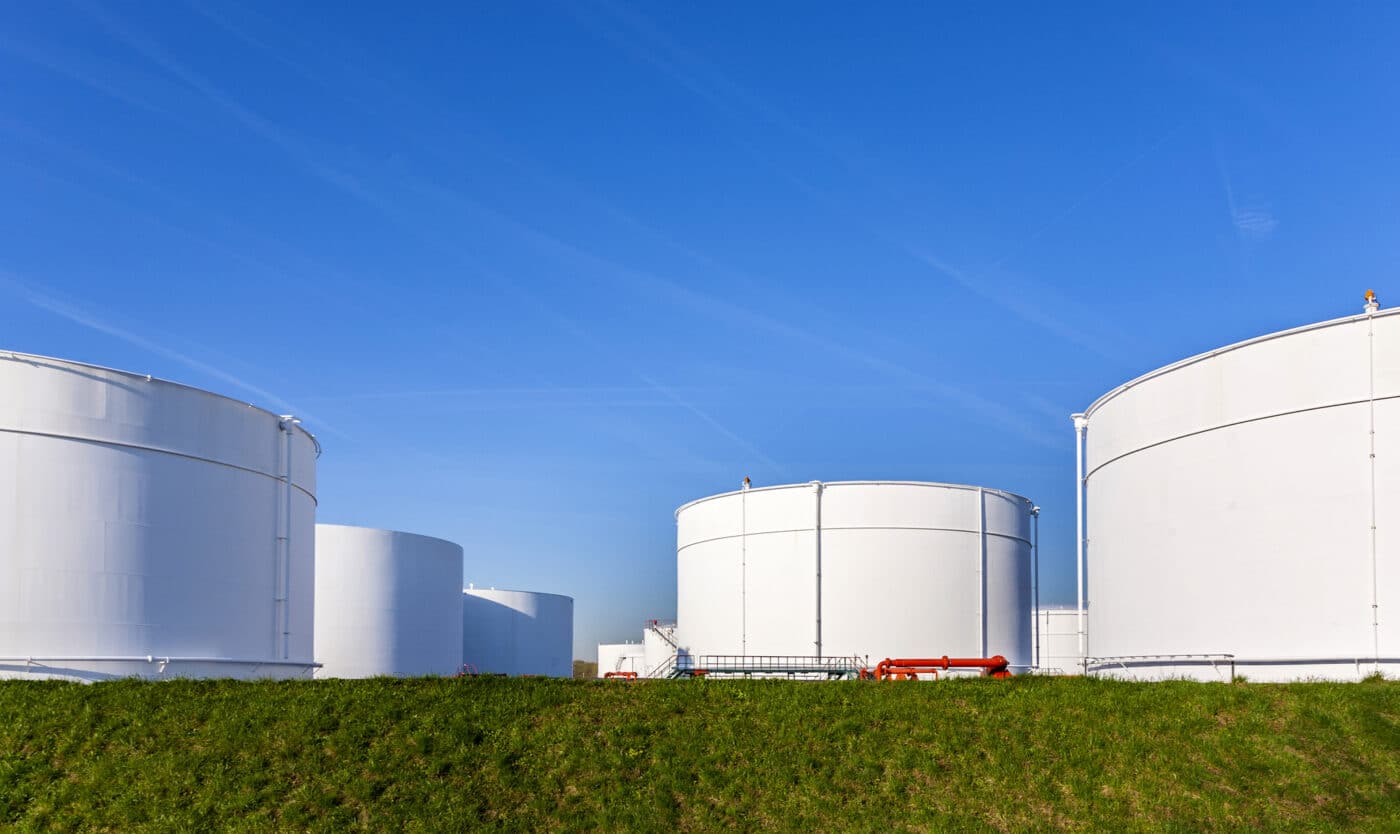
Crude oil is naturally occurring beneath the earth’s surface and is mostly recovered through oil drilling. In a refinery, crude oil is processed into a variety of petroleum products. Crude oil comes in many different qualities, depending on its origin. It may be considered light if it has a low density or heavy if it has a high density and it may be referred to as sweet if it contains relatively little sulfur or sour if it contains substantial amounts of sulfur. An amount of crude oil is mostly expressed in barrels (one barrel equals 159 liters). Crude oil is typically transported and stored in very large volumes. The tanks are large, often 100.000 m3. Tanks typically have a floating roof instead of a fixed roof, this to reduce emissions. The lighter fractions in the crude oil have a high vapour pressure which creates risk for fire and explosion. Therefore extensive safety precautions and firefighting capacities are required.
Fuel oil
Fuel oil is mainly a residue from the refining of crude oil. It is predominantly used as fuel (bunkers) for larger ships and for the production of electricity. It is black or dark brown in colour and highly viscous. The density is typically between 0.95 and 1.02 kg/l, close to the density of water. Fuel oil comes in viscosities from 30 to 700 cSt (centistokes at 50oC, water is 1 cSt at 20oC). The most common fuel oils have a viscosity of 180 and 380 cSt. Fuel oil is typically stored and transported at a temperature of 50 to 60oC. At lower temperatures it would be too viscous to pump. Tanks and pipelines need to be insulated and heated. Due to the dark colour and the high viscosity the tanks and pipelines cannot easily be cleaned and need thus to be dedicated to the use for fuel oil.
Gasoil (diesel)
Gas oil is the main group of middle distillates from the refining of crude oil. Gas oils are typically used to power cars, trucks and other mobile equipment and is also widely used for power generation. Diesel is a gas oil of a certain specification. Gas oils typically have a light yellow colour and a density between 0.8 and 0.85 kg/l. Gas oils are, unlike fuel oils, not viscous and have typically a flash point (the lowest temperature at which it can vaporize to form an ignitable mixture in air) of 60oC or higher. Gas oil is the easiest petroleum product to handle and store. It can easily be pumped at ambient temperatures and, due the high flashpoint, has a limited risk for fire or explosions. It is easy to clean. Modern diesel fuels have very low sulphur specifications which makes them prone to contamination from other high sulphur gas oils.
Gasoline
Gasoline, or petrol, is typically a composition of various petroleum distillates (the so-called gasoline pool). Gasoline comes in many different specifications which are blended from the gasoline pool components. Gasoline is the most commonly known petroleum product as it is widely used to fuel cars. Gasoline is crystal clear or very slightly yellow in colour whilst the typical density is 0.75 kg/l. With a typical flashpoint as low as -40oC, gasoline is highly flammable. Gasoline evaporates very easily. To reduce emission to the air, which also reduces risk of fire, gasoline storage requires emission reduction measures like floating roofs in the tanks, vapour return systems and vapour treatment systems. Due to the high flammability, gasoline storage requires extensive safety precautions and firefighting capacities.
Jet fuel
Jet fuel is, like gas oil, a middle distillate. As the name suggests it is used to power jet engines of primarily aircraft. Unlike sometimes believed, jet fuel is not poisonous or highly flammable. Its properties are rather similar to those of gas oil. Jet fuel itself is, like gasoil, relatively easy to store and handle. Due to its sensitive use in airplanes it requires however a high degree of quality control, which is documented in the JIG guidelines.
LPG
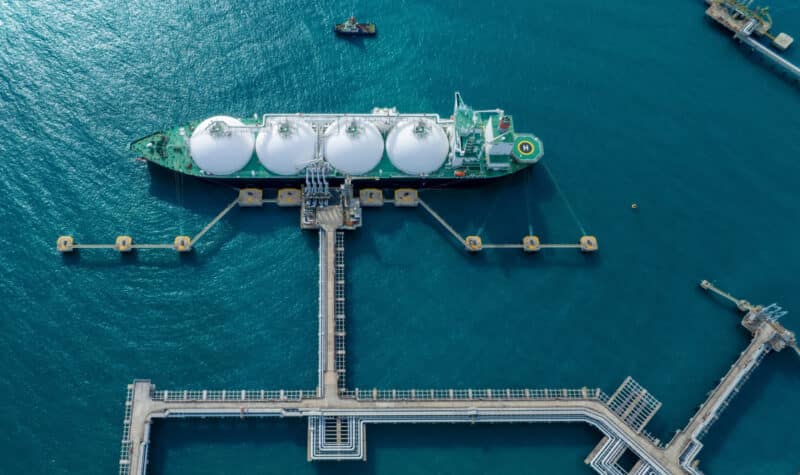
LPG stands for Liquefied Petroleum Gas. As the other petroleum products, the gas is produced in a refinery from crude oil and consists mainly of propane and butane. The gas is liquefied by bringing it under a pressure of 10-15 bar, depending on the ambient temperature. LPG is used for many different purposes like heating and cooking but also as automotive fuel. LPG is stored in bullets (up to 500 m3) or spheres that can withstand the required pressure. LPG storage and handling requires extensive safety precautions.
© 2020 Riverlake. All rights reserved.